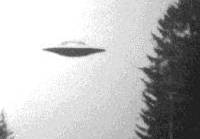
1976年伊朗德黑兰UFO拦截事件(IRANIAN UFO INTERCEPT – 1976)
中文版
中文版
简介:1976年9月19日凌晨,伊朗德黑兰上空发生一起雷达和目击UFO事件。两架F-4战斗机在接近不明飞行物时失去仪器和通讯,撤离后恢复。该事件被美国国防情报局记录并分发给白宫等机构,成为史上最详尽的军方与异常现象接触案例之一。多名伊朗高级军官公开表示该物体非地球起源。
1976年德黑兰UFO事件是一次雷达和目击不明飞行物(UFO)的事件,发生在1976年9月19日凌晨,地点在伊朗首都德黑兰上空。事件中,两架F-4“鬼怪”II型喷气式拦截机在接近该物体时据称失去了仪器和通讯功能,撤离后恢复;其中一架飞机在准备开火时还据称遭遇了武器系统暂时失灵。
该事件被记录在一份四页的美国国防情报局(DIA)报告中,并分发给了至少白宫、国务卿、参谋长联席会议、国家安全局(NSA)和中央情报局(CIA)。这仍然是历史上记录最详尽的军方与异常现象接触事件之一,多名直接参与事件的伊朗高级军官公开表示,他们认为该物体并非地球起源。
事件经过
大约当地时间1976年9月19日00:30(世界协调时21:00),伊朗帝国空军德黑兰指挥所接到来自谢米兰市居民的四次电话报告,称夜空中出现异常活动。来电者报告看到一个类似星星但更亮的物体。
当指挥所确认没有直升机在空中飞行以解释这些报告时,他们联系了作战助理副司令尤塞菲将军。尤塞菲将军起初认为该物体只是一颗星星,但在与梅赫拉巴德国际机场的塔台商议并亲自查看后,发现这是一个比星星更亮的非常明亮的物体,于是他决定从哈马丹的沙赫罗基空军基地(位于德黑兰以西约175英里(282公里)处,位置见右图)紧急起飞一架F-4“鬼怪”II喷气式战斗机。
01:30(世界协调时22:00),由穆罕默德·雷扎·阿齐兹哈尼上尉驾驶的F-4起飞,前往德黑兰以北40海里(74公里)处。据观察,该物体非常明亮,从70英里(110公里)外就能看到。当飞机接近到距离物体约25海里(46公里)时,喷气机失去了所有仪器和通讯能力,迫使阿齐兹哈尼中断拦截任务,转向返回沙赫罗基;撤离后,两个系统都恢复了功能。
01:40,第二架F-4紧急起飞,由帕尔维兹·贾法里中尉和贾拉勒·达米里安中尉驾驶。贾法里后来以将军身份退役,并于2007年11月12日在全国新闻俱乐部会议上要求对UFO现象进行全球调查。贾法里的喷气机在27海里(50公里)范围内对物体进行了雷达锁定。UFO的雷达信号类似于波音707飞机。当以150海里(280公里)每小时的速度接近物体,距离为25海里(46公里)时,物体开始移动,与F-4保持稳定的25海里(46公里)距离。由于物体极其明亮,难以确定其大小。物体的灯光交替呈现蓝色、绿色、红色和橙色,并以方形图案排列。灯光按顺序闪烁,但闪烁速度极快,以至于所有灯光可以同时看到。
当物体和F-4继续向南飞行时,一个较小的第二物体从主物体上分离,高速向F-4靠近。贾法里中尉以为自己受到攻击,试图发射一枚AIM-9“响尾蛇”导弹,但突然失去了所有仪器,包括武器控制和通讯。他后来表示曾试图弹射,但未能成功,因为这一完全机械的系统也失灵了。贾法里随后进行转向和负G俯冲作为规避动作。该物体在他身后约3至4海里(7.4公里)处跟随了一小段时间,然后转向并重新与主物体汇合。
同样,一旦F-4转向离开,仪器和通讯立即恢复。F-4机组随后看到另一个明亮物体从主物体的另一侧分离,高速垂直下降。F-4机组预计它会撞击地面并爆炸,但它却轻轻着陆。F-4机组随后降低高度飞越该地点,并标记了灯光着陆的位置。贾法里后来评论说,该物体非常明亮,照亮了地面,他能看到周围的岩石。该物体降落在伊朗郊区的雷伊炼油厂附近。随后他们在梅赫拉巴德降落,注意到每次经过梅赫拉巴德磁方位150度时,都会遇到干扰和通讯故障。
一架接近梅赫拉巴德的民用客机也在相对于梅赫拉巴德的同一位置经历了通讯中断。当F-4进行最后进近时,他们又看到了另一个物体,呈圆柱形,两端有明亮稳定的灯光,中间有闪烁的灯光。该物体在F-4进近时飞越了它们。梅赫拉巴德塔台报告该区域没有其他飞机,但塔台人员在贾法里的指引下能够看到该物体。多年后,主管制员和一名调查将军透露,该物体还飞越了控制塔,并使其所有电子设备失灵(见下文)。
第二天,F-4机组乘坐直升机飞往他们看到较小物体着陆的地点。在白天,那里被确定为一个干涸的湖床,但看不到任何痕迹。然后他们向西盘旋该区域,并接收到一个明显的“蜂鸣器”信号。信号在一所小房子附近最响,于是他们降落并询问房主关于前一晚的任何异常事件。房主报告说听到了巨大的噪音和像闪电一样的亮光。
对着陆地点的进一步调查,包括对该区域的辐射测试,显然已经进行,但结果从未公开。由于这一事件发生在沙阿倒台之前,德黑兰的任何记录可能已经丢失。
DIA表格 随报告附有一份来自DIA的表格,评估了报告的质量。表格中勾选的方框表明内容具有高价值,报告得到了其他来源的确认,并且信息的实用性对他们可能有用。DIA的表格还指出:
“一份出色的报告。此案例是经典案例,符合有效研究UFO现象所需的所有标准:
a) 该物体被来自不同地点(即谢米兰、梅赫拉巴德和干涸湖床)和不同视角(空中和地面)的多名目击者看到。
b) 许多目击者的可信度很高(一名空军将军、合格的机组人员和经验丰富的塔台操作员)。
c) 视觉目击得到了雷达的确认。
d) 三架不同的飞机报告了类似的电磁效应(EME)。
e) 对部分机组人员产生了生理影响(例如,由于物体亮度导致夜视能力丧失)。
f) UFO展示了异常高的机动性。”
部分参与者的观点 1994年,《目击》电视节目追踪并采访了事件中的多名主要人物。几乎所有人都表示,他们认为自己面对的是高科技的外星飞行器。
第一架喷气式拦截机的飞行员亚迪·纳泽里(上文提到第一位飞行员是“穆罕默德·雷扎·阿齐兹哈尼上尉”)估计UFO的速度在每小时两千到三千英里之间。他说该物体“……超出了我的速度和能力。(后来的)F-4……也无法追上该物体。那时我就想,这是一个UFO。”纳泽里补充道,“……没有国家拥有这种类型的飞行器,所以我认为,这艘飞船来自另一个星球。”
第二架F-4的飞行员帕尔维兹·贾法里将军表示,在试图发射导弹失败后,他们担心生命安全并试图弹射,但弹射按钮也失灵了。在2007年11月12日华盛顿特区的新闻发布会上,贾法里补充了细节:主物体发射了四个物体,一个朝他飞来,不久后返回主物体;另一个他试图开火但未成功;还有一个跟随他返回;最后一个降落在沙漠地面上并发出光芒。在新闻发布会上宣读准备好的声明后,贾法里被问及是否相信自己遇到了外星飞船,皮鲁齐表示他非常确信自己遇到了。(更多细节和参考资料见下文)
伊朗空军作战助理副司令纳德·尤塞菲将军表示,他下令进行了两次喷气机拦截。他说:“由于1976年9月19日的经历,我相信那里有东西。我们只是不知道它是什么或来自哪里。”
尤塞菲重复了DIA文件中已记录的许多事件细节,但也补充了一些内容。尤塞菲说,在第二架F-4失去通讯和武器系统并采取规避动作后,它尝试了最后一次追击UFO。即使以2马赫的速度接近,UFO也轻松地拉开了距离。飞行员决定返回梅赫拉巴德机场。当他们接近降落时,尤塞菲说控制塔打电话告诉他,UFO正跟随喷气机返回基地。
控制塔主管侯赛因·皮鲁齐告诉《目击》杂志,那名飞行员因被大型UFO尾随而陷入恐慌。据皮鲁齐和其他管制员称,该UFO在梅赫拉巴德上空进行了低空飞越,高度约为2200至2500英尺(760米)。它被描述为一个圆柱形物体,大小如同旅游巴士,两端有明亮的稳定灯光,中间有闪光灯。在飞越过程中,控制塔完全断电,尽管机场其他区域未受影响。飞越后,UFO向西飞去,25分钟后被一名埃及空军飞行员在地中海上空发现,随后又被一架荷兰皇家航空航班的飞行员、机组人员和乘客在葡萄牙里斯本上空发现,报告称它正加速向西飞越大西洋。
次日,德黑兰展开了一项调查。伊朗空军副司令阿卜杜拉·阿扎巴尔津中将采访了所有相关人员并撰写了一份报告。第二名F-4飞行员贾法里将军表示,他是被采访者之一,一名美国上校坐在那里做笔记。这些信息后来出现在美国国防情报局对该事件的记录中。
控制塔管制员皮鲁齐也是被采访者之一。他回忆起阿扎巴尔津小组在会议结束时的一次讨论。“当他们听到我们的报告和飞行员的报告后,他们得出结论,没有任何国家拥有这样的技术,所有人都认为这是一个来自外太空的奇怪物体。”
在接受《目击》杂志采访时,阿扎巴尔津独立证实了皮鲁齐的说法。他说,他们得出结论,UFO故意干扰了飞机和控制塔的电子设备。关于那些似乎从UFO中射出的物体,阿扎巴尔津说:“飞行员称它们为火球,但我们都认为那是非常强大的电磁波,干扰了所有电子设备,从甚高频、超高频、火控系统、机炮雷达、机炮通信,一切都被干扰了。所有设备都失灵了。”
阿扎巴尔津还表示,当第二架F-4从紧急俯冲中拉起并从UFO下方经过时,副驾驶清楚地看到了UFO。他告诉《目击》杂志和研究员布鲁斯·麦卡比博士,副驾驶能看到它的形状,他说它像盘子或飞碟一样圆,有一个像半个球体的座舱或驾驶舱,笼罩在暗淡的橙色或黄色光芒中,但看不到任何机组人员。
考虑到所有因素,包括UFO展示出的非凡加速度,阿扎巴尔津得出结论,UFO的性能超过了任何已知的人类飞行器。
这一结论被传达给了国王的私人军事顾问哈特米将军,他指示阿扎巴尔津将报告交给德黑兰的美国军事援助顾问团。负责该顾问团并担任美国空军对伊朗首席军事顾问的是理查德·西科德将军。西科德拒绝接受采访。阿扎巴尔津将军拒绝公开说明西科德是否看过这份报告,但另一位伊朗空军高级指挥官马穆德·萨巴哈特告诉《目击》杂志,事件当晚他正在德黑兰参加会议。“这次UFO事件是我们空军历史上第一次发生这样的事情。按照军事系统的惯例,让西科德参加那次会议是正常且惯常的做法。”
阿扎巴尔津将军还告诉麦卡比,调查的完整记录已移交给美国空军。然而,美国空军一直坚称,他们对该事件的唯一记录来自美国国防情报局的一份文件,该文件最初由一名采访了第二架F-4飞行员的美国空军军官编写。
关于个人观点,阿扎巴尔津将军告诉《目击》杂志:“我相信UFO。我不能忽视它们的存在。它们想找到某种方式与地球人接触。它们正在尝试,而且会做到。”阿扎巴尔津的观点得到了伊朗空军前作战副司令阿米尔·卡米亚比普尔的赞同。由于在此事件中的亲身经历,他相信:“UFO正试图找到某种方式与我们的世界建立联系。我对此确信无疑。”
杂项细节与文件在1976年10月1日华盛顿特区出版的《伊朗时报》上,发表了一篇据称是第二架喷气式拦截机飞行员贾法里中尉的第一手叙述,基于实际追逐的录音带。飞机以超音速飞向德黑兰。贾法里说,看到他靠近时,UFO加快了速度。“它的大小是从地球看到的月亮的一半,”他说。“它发出紫、橙、白三色光,亮度约为月光的3倍。”
贾法里接到命令,如果无法靠近就返回基地,于是他停止了追逐。在返航途中,他“告诉空中管制员,UFO掉头追上了追逐者,他面临被逼降的危险。‘有东西从我后面袭来……我想它会撞上我。它刚刚擦过我身边,险些撞上……’飞行员慌乱的声音在录音带上清晰可闻。”
文章还叙述了飞行员如何提到一个“明亮的圆形物体,周长约4.5米,从UFO中分离出来”。文章还指出,该物体的真实性已得到两名F-4飞行员、多名控制塔操作员以及地面目击者的确认,他们报告看到一个“明亮物体”掠过天空,而其他人则报告看到“某个明亮的东西”从天空坠落。
后来另一份文件曝光,显示大约3到4小时后(即当地时间9月19日凌晨1点到2点),摩洛哥多个地点也目击到一个非常相似的UFO。该文件来自美国驻摩洛哥拉巴特大使馆,日期为1976年9月25日,致美国国务院,主题为“请求信息:不明飞行物”。文件称,摩洛哥警方收到了大量报告,称有一个物体大致沿大西洋海岸低空平行飞行。它呈银白色发光圆形或管状,间歇性地喷出明亮的火花和碎片。它没有发出任何声音。大使馆一位未透露姓名的简报人员说,他亲眼看到了它,它似乎像准备降落的飞机一样缓慢移动。起初它呈圆盘状,但靠近后变成了管状。
美国国务卿亨利·基辛格十天后作出回应,采取了美国官方对UFO的政策立场。基辛格声称,康登委员会的报告表明,所有UFO都可归因于自然原因,无需进一步研究。基辛格说,人们可能看到了一颗流星或一颗没有再入记录的报废卫星部件。2012年,业余卫星观测者将摩洛哥目击事件的原因确定为“从将闪电号1-35送入轨道的闪电号火箭第三级抛出的BOZ排空发动机组件”的再入。他们绘制的地面轨迹图显示,再入轨迹经过了所有报告UFO目击地点的视线范围内。
在国家安全局档案中搜索此案的更多信息时,还发现一篇关于德黑兰事件的文章于1978年发表在机密刊物《MIJI季刊》上,该刊物由德克萨斯州圣安东尼奥的电子安全司令部出版。该期刊包含所有电子战“欺骗”、“入侵”、“干扰”和“干涉”事件的叙述性摘要(因此得名MIJI)。该报告基本提供了美国国防情报局文件中的细节,但文章开头如下:
“在职业生涯的某个时刻,每位飞行员都可能遇到奇怪、不寻常的事件,这些事件永远无法通过逻辑或后续调查得到充分或完全的解释。以下文章叙述了1976年末伊朗帝国空军两架F-4鬼怪式战斗机机组人员报告的这样一个事件。关于这些奇怪事件,没有进一步的信息或解释:这个故事将被归档,可能被遗忘,但它读起来有趣,甚至可能令人不安。”
怀疑论者的解释与分析在其著作《UFO:被蒙蔽的公众》中,记者菲利普·J·克拉斯声称,目击者最初看到的是一个天文物体,很可能是木星,而飞行员的失职和设备故障则解释了其余现象。
明亮的物体最初被德黑兰最北部的谢米兰区的目击者注意到。德黑兰东北部的一名目击者正是尤塞菲将军本人,他下令进行喷气式拦截。喷气机从哈马丹的沙赫罗基空军基地紧急起飞,该基地在德黑兰西南偏西约175英里(282公里)处,并被引导至德黑兰市中心以北40英里(64公里)处的一个点。然而,木星当时在东方。因此,UFO当时与木星相距约90度。此外,第二架F-4从德黑兰北部一直追逐UFO到南部。同样,木星与追逐轨迹也几乎成90度角。
此外,两架F-4都在雷达上捕捉并跟踪到了某个东西,这对于像恒星或行星这样的天文物体来说是不可能的。遭遇中的许多其他细节与克拉斯的解释不符,例如两架F-4和控制塔在接近UFO时电子设备失灵,以及该地区第三架民用飞机也失去了通信。
杰罗姆·克拉克评论道:“克拉斯理论的前提是,伊朗参与者严重缺乏基本的观察和技术技能。在某些方面,相信目击者有意捏造这一事件的说法反而更容易,尽管同样没有证据支持。阿扎尔巴津将军和空中管制员佩鲁齐都认为这一事件令人完全困惑。正如文件所示,熟悉此事的美国分析人员也有同感。”
总结许多UFO研究者认为,这一事件是有记录以来最重要的UFO遭遇之一。一些研究者将其视为UFO外星起源的有力证据,因为F-4战机在即将开火时突然断电,且两架不同飞机在追逐过程中出现仪器故障。一颗军事间谍卫星也记录了这一事件。DSP-1卫星在此期间探测到持续约一小时的红外异常。
媒体提及该事件
- 1994年,《目击》电视节目报道了这一事件,采访了许多参与者。(见上文)
- 在2007年加拿大纪录片《最佳证据》中,电影制作人保罗·金博尔将德黑兰事件列为十大最佳UFO案例之一。该最佳案例列表是通过对顶尖UFO研究者进行民意调查编制的。
- 2007年11月12日,在华盛顿特区国家新闻俱乐部的新闻发布会上,第二架F-4战机的飞行员帕尔维兹·贾法里将军回忆了他如何试图拦截一个“闪烁着强烈红、绿、橙、蓝光的物体”。贾法里说:“在这次近距离接触中,另外四个形状不同的物体在不同时间从主物体分离。每当它们靠近我时,我的武器就会卡住,无线电通讯也会受到干扰。其中一个物体朝我飞来,我以为那是导弹。我试图发射热寻导弹,但导弹面板失灵了。另一个物体在我返航下降时跟随我。其中一个分离的物体降落在一片开阔区域,发出明亮的光芒,地面上的沙子清晰可见。我们全程都能听到紧急信号,其他当时飞行的客机也报告了这一点,并且持续了数天。事件发生后,我在总部接受采访时,一名美国上校做了记录……”当被问及是否认为这是外星飞船时,他表示非常确信。
1978年德黑兰UFO事件1978年德黑兰上空发生了一起类似的UFO事件,同样涉及电磁干扰,并引起了美国国防情报局的关注。报告由美国武官办公室发送给参谋长联席会议,这是外国情报报告的正常流程。与1976年的案例一样,分发名单包括国务卿、国家安全局和中央情报局。该报告引用了1978年7月18日的伊朗英文报纸《德黑兰日报》。
文章称,7月16日晚,许多人在德黑兰北部再次看到了一个UFO。一名目击者称,他看到该物体突然出现在天空中,并悬停在他正上方。目击者描述它是一个“奇怪的发光物体”,似乎向西南方向漂浮,朝向萨韦(大约在德黑兰和哈马丹之间)。目击者联系了国家广播网和梅赫拉巴德的控制塔,控制塔确认了该物体的存在,但未提供更多细节。文章补充道:“梅赫拉巴德机场控制塔的官员和汉莎航空的机组人员也报告了仪器上的异常读数。”
文章还简要提到了1978年4月的另一起UFO事件。一名当地飞行员表示,他和副驾驶在阿瓦士和德黑兰之间飞行时拍摄到了一个“闪闪发光”的物体。(阿瓦士位于德黑兰西南约750英里(1210公里)处。)在民航安全部门许可之前,他无法公布这些照片。显然,地面雷达也提供了佐证。“梅赫拉巴德雷达控制官员表示,当时他们在屏幕上检测到一个大小约为巨型喷气式客机20倍的物体。”据称民航当局正在调查,但结果尚未公开。
English Version
中文版
简介:1976年9月19日凌晨,伊朗德黑兰上空发生一起雷达和目击UFO事件。两架F-4战斗机在接近不明飞行物时失去仪器和通讯,撤离后恢复。该事件被美国国防情报局记录并分发给白宫等机构,成为史上最详尽的军方与异常现象接触案例之一。多名伊朗高级军官公开表示该物体非地球起源。
The 1976 Tehran UFO Incident was a radar and visual sighting of an unidentified flying object (UFO) over Tehran, the capital of Iran, during the early morning hours of 19 September 1976. During the incident, two F-4 Phantom II jet interceptors supposedly lost instrumentation and communications as they approached, only to have them restored upon withdrawal; one of the aircraft also supposedly suffered temporary weapons systems failure, while preparing to open fire.
The incident, recorded in a four-page U.S. Defense Intelligence Agency (DIA) report distributed to at least the White House, Secretary of State, Joint Chiefs of Staff, National Security Agency (NSA) and Central Intelligence Agency (CIA), remains one of the most well-documented military encounters with anomalous phenomena in history, and various senior Iranian military officers directly involved with the events have gone on public record stating their belief that the object was not of terrestrial origin.
The Incident
At approximately 0030 hours local time (2100Z), 19 September 1976, the Imperial Iranian Air Force command post at Tehran received four reports by telephone, from civilians in the Shemiran city district, of unusual activity in the night sky. The callers reported seeing an object similar to a star, but much brighter.
When the command post found no helicopters airborne to account for the reports, they called General Yousefi, assistant deputy commander of operations. General Yousefi at first said the object was only a star, but after conferring with the control tower at Mehrabad International Airport and then looking for himself to see a very bright object larger than a star, he decided to scramble one F-4 Phantom II jet fighter from Shahrokhi Air Force Base in Hamadan, approximately 175 miles (282 km) west of Tehran (for location see map at right).
At 0130 hours (2200Z), the F-4, piloted by Captain Mohammad Reza Azizkhani was launched and proceeded to a point 40 nautical miles (74 km) north of Tehran. It was noted that the object was of such brilliance that it could be seen from 70 miles (110 km) away. When the aircraft approached to approximately 25 nautical miles (46 km) from the object, the jet lost all instrumentation and communications capabilities, prompting Azizkhani to break off the intended intercept and turn back toward Shahrokhi; upon the evasion, both systems resumed functioning.
At 0140 hours, a second F-4 was scrambled, piloted by Lieutenant Parviz Jafari and Lieutenant Jalal Damirian. Jafari would eventually retire as a general and participate on 12 November 2007, at a National Press Club conference demanding a worldwide investigation into UFO phenomena. Jafari’s jet had acquired a radar lock on the object at 27 nautical miles (50 km) range. The radar signature of the UFO resembled that of a Boeing 707 aircraft. Closing on the object at 150 nautical miles (280 km) per hour and at a range of 25 nautical miles (46 km), the object began to move, keeping a steady distance of 25 nautical miles (46 km) from the F-4. The size of the object was difficult to determine due to its intense brilliance. The lights of the object were alternating blue, green, red, and orange, and were arranged in a square pattern. The lights flashed in sequence, but the flashing was so rapid that they all could be seen at once.
While the object and the F-4 continued on a southerly path, a smaller second object detached itself from the first and advanced on the F-4 at high speed. Lieutenant Jafari, thinking he was under attack, tried to launch an AIM-9 sidewinder missile, but he suddenly lost all instrumentation, including weapons control, and all communication. He later stated he attempted to eject, but to no avail, as this system, which is entirely mechanical, also malfunctioned. Jafari then instituted a turn and a negative G dive as evasive action. The object fell in behind him at about 3 to 4 nautical miles (7.4 km) distance for a short time, then turned and rejoined the primary object.
Once again, as soon as the F-4 had turned away, instrumentation and communications were regained. The F-4 crew then saw another brightly lit object detach itself from the other side of the primary object and drop straight down at high speed. The F-4 crew expected it to impact the ground and explode, but it came to rest gently. The F-4 crew then overflew the site at a decreased altitude and marked the position of the light’s touchdown. Jafari would later comment that the object was so bright that it lit up the ground and he could see rocks around it. The object had touched down near Rey Oil Refinery on the outskirts of Iran. Then they landed at Mehrabad, noting that each time they passed through a magnetic bearing of 150 degrees from Mehrabad, they experienced interference and communications failure.
A civilian airliner that was approaching Mehrabad also experienced a loss of communications at the same position relative to Mehrabad. As the F-4 was on final approach, they sighted yet another object, cylinder-shaped, with bright, steady lights on each end and a flashing light in the middle. The object overflew the F-4 as they were on approach. Mehrabad tower reported no other aircraft in the area, but tower personnel were able to see the object when given directions by Jafari. Years later, the main controller and an investigating general revealed that the object also overflew the control tower and knocked out all of its electronic equipment as well (see below).
The next day, the F-4 crew flew out in a helicopter to the site where they had seen the smaller object land. In the daylight, it was determined to be a dry lake bed, but no traces could be seen. They then circled the area to the west and picked up a noticeable “beeper” signal. The signal was loudest near a small house, so they landed and questioned the occupants of the house about any unusual events of the previous night. They reported a loud noise and a bright light like lightning.
Further investigation of the landing site, including radiation testing of the area was apparently done, but the results were never made public. Since this event occurred before the fall of the Shah, any records in Tehran may be lost.
D.I.A formAlongside the report there was a form from the DIA which assessed the quality of the report. The form indicated in checked boxes that the content was of high value, that the report was confirmed by other sources, and that the utility of the information was potentially useful to them. The form from the DIA also stated the following:
“An outstanding report. This case is a classic which meets all the criteria necessary for a valid study of the UFO phenomenon:
a) The object was seen by multiple witnesses from different locations (i.e., Shamiran, Mehrabad, and the dry lake bed) and viewpoints (both airborne and from the ground).
b) The credibility of many of the witnesses was high (an Air Force general, qualified aircrews, and experienced tower operators).
c) Visual sightings were confirmed by radar.
d) Similar electromagnetic effects (EME) were reported by three separate aircraft.
e) There were physiological effects on some crew members (i.e., loss of night vision due to the brightness of the object).
f) An inordinate amount of maneuverability was displayed by the UFOs.”
Opinions of some participantsIn 1994, the Sightings TV program tracked down and interviewed various principals involved in the incident. Nearly all expressed the opinion that they were dealing with a high-technology extraterrestrial craft.
The pilot of the first jet interceptor, Yaddi Nazeri (above in the article, the first pilot is stated as ‘Captain Mohammad Reza Azizkhani’), estimated that the UFO was traveling somewhere between two and three thousand miles per hour. He said that the object “…was beyond my speed and power. The [later] F-4… also could not catch up to the object. That’s when I thought, this is a UFO.” Nazeri added that “…no country had this type of flying object, so I was thinking, this craft is from another planet.”
The second F-4 pilot, General Parviz Jafari, said that after trying to fire a missile and failing, they feared for their lives and tried to eject, but the eject button also malfunctioned. At a Washington D.C. press conference on 12 November 2007, Jafari added details that the main object emitted four objects, one that headed towards him and later returned to the main object a short while later, one which he tried unsuccessfully to fire on, another which followed him back, and one which landed on the desert floor and glowed. Following his prepared statement at the press conference, Jafari was asked if he believed he had encountered an alien spacecraft and Pirouzi said he was quite certain that he had. (see below for further details and references)
General Nader Yousefi, the assistant deputy commander of the Iranian Air Force, said he ordered the two jet interceptions. He said that, “Because of the experience I had on 19 September 1976, I believe there is something up there. We just don’t know what it is or where it came from.”
Yousefi repeated many of the details of the encounter already recorded in the DIA document but also added a few more. Yousefi said that after the second F-4 lost its communications and weapons systems and took evasive maneuvers, it tried one last pursuit of the UFO. Even approaching at Mach 2, the UFO easily outdistanced it. The pilots decided to return to Mehrabad airport. As they were approaching to land, Yousefi said the control tower phoned him that the UFO was following the jet back to base.
The control tower supervisor, Hossein Pirouzi, told Sightings that the pilot was in a panic with the large UFO on its tail. According to Pirouzi and other controllers, the UFO performed a low-altitude flyby over Mehrabad at about 2200 to 2,500 feet (760 m). It was described as a cylinder-shaped object as large as a tour bus, with bright steady lights on each end and a flasher in the middle. During the flyby, the control tower lost all power, although other parts of the airport were unaffected. After the flyby, the UFO took off to the west and was spotted 25 minutes later over the Mediterranean by an Egyptian Air Force pilot, then again over Lisbon, Portugal by the pilot, crew, and passengers of a KLM flight, reporting that it was speeding westward over the Atlantic Ocean.
The following day, an investigation was held in Tehran. The Iranian Air Force Deputy Commander, Lieutenant General Abdollah Azarbarzin, conducted interviews with all of the principals and wrote up a report. Gen. Jafari, the second F-4 pilot, stated that he was among those interviewed and an American colonel sat there and took notes. This information later appeared in the D.I.A. account of the incident.
Tower controller Pirouzi was also among those interviewed. He recalled a discussion by Azarbarzin’s panel at the conclusion of the meeting. “When they heard our report and the report of the pilots, they concluded that no country is capable of such technology, and all of them believed it was a strange object from outer space.”
When interviewed by Sightings, Azarbarzin independently confirmed Pirouzi’s statement. He said they concluded that the UFO had deliberately jammed both the aircraft and control tower electronics. About the objects that seemed to shoot out of the UFO, Azarbarzin said, “The pilots called them fireballs, but we all thought that they were very powerful waves of electromagnetism, which jammed all the electronics starting from VHF, UHF, fire control system, gun radar, gun communications, everything. Everything was gone.”
Azarbarzin also said that the copilot got a good look at the UFO when the second F-4 came out of its emergency dive and passed underneath it. He told both Sightings and researcher Dr. Bruce Maccabee the copilot could see the shape, which he said was round like a plate or just like a saucer, with a canopy or cockpit that looked like half a ball bathed in a dim orange or yellowish light, but with no visible crew.
When all factors were considered, including the extraordinary rate of acceleration displayed by the UFO, Azarbarzin concluded that the UFO had outperformed any known human aircraft.
This conclusion was relayed to General Hatemi, the Shah’s personal military advisory, who instructed Azarbarzin to give his report to the U.S. Military Assistance Advisory Group in Tehran (MAAG). In charge of MAAG and chief U.S. Air Force military advisory to the Iranians was General Richard Secord. Secord declined to be interviewed. Gen. Azarbarzin refused to state publicly whether Secord had seen the report, but another high Iranian Air Force commander, Mamoud Sabahat, told Sightings that he was present in Tehran to attend a meeting on the night of the incident. “This UFO event was the first time in our Air Force’s history that anything had happened like this. It would have been a usual and customary part of the military system to put him [Secord] at that meeting.”
Gen. Azarbarzin also told Maccabee that the complete records of the investigation had been turned over to the U.S. Air Force. However, the USAF has steadfastly maintained that their only record of the incident was provided in the DIA document originally prepared by a USAF officer who interviewed the pilot of the second F-4.
About his personal opinion, Gen. Azarbarzin told Sightings, “I believe in UFOs. I cannot ignore their existence. They want to find some way of contacting the people of earth. They are trying, and they are going to do it.” Azarbarzin’s opinion was echoed by Amir Kamyabipour, former deputy commander of operations in the Iranian Air Force. Because of what he experienced first-hand during this incident, he believes, “UFOs are trying to find some way to make contact with our world. I am positive of this.”
Miscellaneous details and documentsIn the 1 October 1976 issue of the Iran Times from Washington, D.C., an apparent firsthand account from Lt. Jafari, the pilot of the second jet interceptor, was published, based on a tape of the actual pursuit. The aircraft flew towards Tehran at over the speed of sound. Jafari said that on seeing him coming, the UFO increased its speed. ‘It was half the size of the moon as seen from earth,’ he said. ‘It was radiating violet, orange, and white light about three times as strong as moonlight.’”
Jafari was ordered to return to base if he was unable to get near, and Jafari cut off pursuit. As he was returning, he “told air controllers that the UFO had doubled back on its pursuers, and he was in danger of being forced down. ‘Something is coming at me from behind. …I think it is going to crash into me. It has just passed by, missing me narrowly…’ The disturbed voice of the pilot was clear on the tape.”
The article also recounted how the pilot spoke of a “bright round object, with a circumference of about 4.5 meters, leave the UFO.” It also said that the authenticity of the object had already been confirmed by the two F-4 pilots, several control tower operators, and witnesses on the ground who reported a “bright body” flit across the sky while others reported seeing “some bright thing” fall from the sky.
Another document later came to light revealing that a very similar UFO was sighted in Morocco from many locations about 3 to 4 hours later, or 0100 to 0200 hours local time on 19 September. The document was from the American embassy in Rabat, Morocco to the U.S. State Department, dated 25 September 1976–“Subject: Request for Info. Unidentified Flying Objects.” It recounted that the Moroccan police had received numerous reports of an object generally flying parallel to the Atlantic coast at low altitude. It had a silvery luminous circular or tubular shape and was giving off intermittent trails of bright sparks and fragments. It made no noise. One of the embassy’s unnamed briefers said he had seen it himself, and that it appeared to be traveling slowly like an aircraft preparing to land. At first it appeared disc-shaped, but took on a tubular appearance as it got closer.
Secretary of State Henry Kissinger responded ten days later and took the official U.S. policy line on UFOs. Kissinger claimed the Condon Committee report had shown that all UFOs could be attributed to natural causes and no further study was warranted. Kissinger said people had probably seen a meteor or a decaying satellite part for which there was no re-entry record. In 2012, amateur satellite observers identified the cause of the Moroccan sightings as the re-entry of the “BOZ ullage motor assembly ejected from the third stage of the Molniya rocket that orbited Molniya 1-35”. They produced a ground track plot that shows that the re-entry trajectory passed within sight of all locations from which UFO sightings were reported.
In a search for further information on the case in National Security Agency records, it was also found that an article on the Tehran incident had been written in 1978 in the classified MIJI Quarterly a periodical published by the Electronics Security Command at San Antonio, Texas. The journal contained narrative summaries of all electronic warfare “meaconing”, “intrusion,” “jamming,” and “interference” incidents (hence the acronym MIJI—see). The report basically provided the details in the DIA document, but prefaced the article as follows:
“Sometime in his career, each pilot can expect to encounter strange, unusual happenings which will never be adequately or entirely explained by logic or subsequent investigation. The following article recounts just such an episode as reported by two F-4 Phantom crews of the Imperial Iranian Air Force during late 1976. No additional information or explanation of the strange events has been forthcoming: the story will be filed away and probably forgotten, but it makes interesting, and possibly disturbing, reading.”
Skeptical explanation and analysisIn his book UFOs: The Public Deceived, journalist Philip J. Klass claimed the witnesses initially saw an astronomical body, probably Jupiter, and pilot incompetence and equipment malfunction accounted for the rest.
The bright object was first noticed by witnesses in Shemiran, the northernmost district of Tehran. One of the witnesses in the northeastern part of Tehran was Gen. Yousefi himself, who ordered the jet interceptions. The jets were scrambled from Shahrokhi AFB in Hamadan, about 175 miles (282 km) west-southwest of Tehran, and vectored to a point 40 miles (64 km) north of central Tehran. However, Jupiter was in the east. Thus the UFO was approximately 90 degrees away from Jupiter at the time. In addition, the second F-4 chased the UFO from northern to southern Tehran. Again, Jupiter would be at nearly 90 degrees to the pursuit trajectory.
Furthermore, both F-4’s picked up and tracked something on their radar, impossible for an astronomical object like a star or planet. Many more details of the encounter do not match Klass’ proposed explanation, such as both F-4’s and the control tower losing their electronics with close approach to the UFO and a third civilian plane in the region also losing communications.
Jerome Clark commented, “Klass’s theory presumes a remarkable lack of even rudimentary observing and technical skills on the parts of the Iranian participants. In some ways it would be easier to credit the notion, for which no evidence exists either, that the witnesses consciously fabricated the sighting. Both Gen. Azarbarzin and air controller Perouzi considered the incident thoroughly puzzling. So, as the documents indicate, did American analysts familiar with it.”
SummaryThe incident is regarded by a number of UFO researchers to be one of the premier UFO encounters ever recorded. Some researchers consider it strong evidence for the extraterrestrial origins of the UFO because there was a blackout on the F-4 just when it was going to fire and because of instrumental breakdowns on two different aircraft while they were on the chase. A military spy satellite also recorded this incident. The DSP-1 satellite detected an infrared anomaly during the time of this event that lasted for about an hour.
Reference to indicent in the media
- The Sightings TV program covered the incident in 1994, interviewing many of the participants. (See above)
- The Tehran incident was considered one of the ten best UFO cases in a 2007 Canadian documentary Best Evidence by film maker Paul Kimball. The list of best cases was compiled by polling leading UFO researchers.
- At a press conference at the National Press Club in Washington D.C. on 12 November 2007, the pilot of the second F-4, General Parviz Jafari, recounted how he tried to intercept an “object which was flashing with intense red, green, orange and blue light.” Jafari said that, “Four other objects with different shapes separated from the main one, at different times during this close encounter. Whenever they were close to me, my weapons were jammed and my radio communications were garbled. One of the objects headed toward me. I thought it was a missile. I tried to launch a heat seeking missile to it, but my missile panel went out. Another followed me when I was descending on the way back. One of the separated objects landed in an open area radiating a high bright light, in which the sands on the ground were visible. We could hear emergency squash all the way, which was reported by other airliners flying at the time and continued for another couple of days. During my interview at H.Q, after the incident, an American colonel took notes…” When asked if he thought this was an alien spacecraft, he said he was quite sure that it was.
1978 Tehran UFO incidentsA somewhat similar UFO incident over Tehran occurred in 1978, again involving electromagnetic interference and U.S. DIA interest. The report was sent by the U.S. Defense Attache’s office to the Joint Chiefs of Staff, part of the normal routing for foreign intelligence reports. As in the 1976 case, the distribution list included the Secretary of State, the NSA, and the CIA. The report was quoted from the Iranian English-language newspaper Tehran Journal, dated 18 July 1978.
The article said that a UFO had been seen by a number of people on the night of 16 July, again in the northern part of Tehran. One witness said he saw the object suddenly emerge in the sky and hover directly above him. Witnesses said it was a “strange glowing object” that seemed to be floating southwestward toward Saveh (about halfway between Tehran and Hamadan). Witnesses contacted the National Radio Network and the control tower at Mehrabad, which confirmed the existence of the object but provided no further details. The article added, “Officials from the control tower at Mehrabad Airport and a Lufthansa aircrew also reported unusual readings on their instruments.”
The article also briefly mentioned another recent UFO incident from April 1978. A local pilot said that he and his copilot had photographed a “glittering” object while flying between Ahvaz and Tehran. (Ahvaz is about 750 miles (1,210 km) southwest of Tehran.) He could not release the photographs until the security division of the civil aviation authorities gave permission. Apparently there was also ground radar corroboration. “A Mehrabad radar control official said that on that occasion they had detected an object some 20 times the size of a jumbo jet on their screens.” Civil aviation authorities were said to be investigating, but the results had not been made public.
本文知识网络
仅显示与本文相关的局部关联,非全站图谱。