Christopher Mellon: A Former Defense Intelligence Official Pushes UFO Videos into the Open
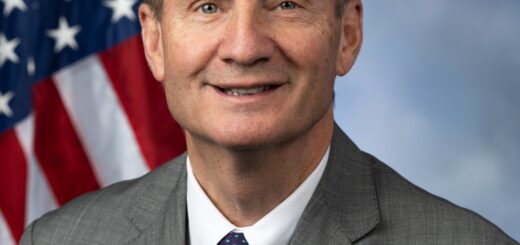
In the contemporary movement for the disclosure of UAP (unidentified aerial phenomena), Christopher Mellon (Christopher Mellon) holds a position that is unique and cannot be filled by anyone else. He is neither a witness on the scene nor a whistleblower inside the intelligence community, but the key bridge between the two—a policymaker with a top-level security clearance who spent decades in defense intelligence and in congressional oversight. When, in 2017, he stepped into the spotlight and staked the political capital he had built on UAP transparency, the whole shape of the disclosure movement changed.
Mellon’s intervention mattered so much because he was not a figure from the margins of UFO enthusiasm, but a core participant in the U.S. national-security system. He comes from one of America’s most prominent financial families, the Mellons; his great-grandfather, Andrew Mellon, served as Secretary of the Treasury. During the Clinton and George W. Bush administrations he was Deputy Assistant Secretary of Defense for Intelligence (Deputy Assistant Secretary of Defense for Intelligence), directly responsible for intelligence related to special operations and low-intensity conflict. He later served as a senior minority staff member of the Senate Select Committee on Intelligence, looking at how the intelligence community operated from the standpoint of congressional oversight. A career that joined the executive to the legislature, and intelligence to policy, made him one of the very few people able at the same time to understand how the intelligence community works on the inside and what congressional oversight requires.
Mellon’s central place in the national-security system
To understand Mellon’s authority on the UAP question, one has to see that he met two conditions that are extremely rare in the disclosure movement. First, he held the highest security clearance the U.S. government grants, and could lawfully see and review classified intelligence on UAP. Second, he was willing to speak in public about the systemic problems that material pointed to. The combination is almost unique—most people with clearance of that rank have chosen silence, while most people willing to talk about UAP in public have no pass into the circle of classified information.
Mellon has explained in public why he broke his silence:
I watched a systemic failure to share intelligence. The U.S. intelligence community collected enormous amounts of data on these unidentified craft—radar tracks, infrared imagery, pilots’ sighting reports—but that information was never properly shared with the bodies that oversee it in Congress, still less with the scientific community or the public. This is not a question about aliens. It is a question about government transparency and about accountability for national security.
Christopher Mellon
These words show the core logic of Mellon’s push for UAP disclosure: he was not promoting a supernatural theory, but pointing to a real gap in the way the U.S. government shares information. When the American sensor network repeatedly captured craft that could not be explained—craft that performed far beyond any known human technology—and the relevant intelligence was never passed to the members of Congress charged with oversight, that itself was a national-security event.
2017: the key role in pushing the videos into the open
In December 2017, The New York Times published a sensational report that, for the first time, told the public of a secret Pentagon UAP research program—the Advanced Aerospace Threat Identification Program (AATIP)—and attached three infrared UAP videos filmed by U.S. Navy fighters: “Tic Tac,” “Gimbal,” and “Go Fast.” The public release of those three videos was a turning point for the contemporary UAP disclosure movement.
Mellon’s part in that episode is still underestimated. It was his work with former AATIP director Luis Elizondo (Luis Elizondo) that carried the videos past the many obstacles inside the intelligence community and finally set them before the public and before Congress. Using the network he had built in Washington over decades, and a precise understanding of how the intelligence community’s rules operate, Mellon found a lawful and safe path by which the material could be released.
When Luis Elizondo came to me, he had already tried every ordinary channel to get this information taken seriously—and every one of them was blocked. When I saw the videos, my first reaction was not shock at what was in them, but shock at a fact: U.S. Navy pilots were running into these craft every day, and the members of Congress who oversee defense knew nothing about it. That was a clean break in the sharing of intelligence.
Christopher Mellon
The series of reports in 2017 set off a chain reaction in Congress: the Senate Select Committee on Intelligence began requiring the Department of Defense to file regular reports on UAP, the Navy revised the formal procedure by which pilots report UAP sightings, and the later creation of the UAP Task Force (UAPTF) and of the All-domain Anomaly Resolution Office (AARO) can both be traced to that wave of disclosure.
A systemic analysis of the failure to share intelligence
Mellon’s frame for analyzing UAP goes past the question of “what this is” and down into the question of governance: “why we do not know what this is.” He breaks the problem into three layers:
The first layer is the data-collection layer. The U.S. military has the most advanced sensor network in the world and every day records a large amount of data on aerial phenomena it cannot explain—but it has no systematic way to gather, standardize, and analyze these scattered streams. Each service, each base, even each sensor platform has its own data pipeline, and together they never form a single picture of the situation.
The second layer is the information-sharing layer. Even after collected data enter the military intelligence system, the information rarely crosses the boundary between agencies. Inside the intelligence community there is a culture of excessive secrecy—in Mellon’s own words, “the secrecy surrounding UAP information looks driven more by the wish to avoid embarrassment than by any real need to protect national security.” When information is kept too secret, congressional oversight loses its point.
The third layer is the decision-and-response layer. Even when the information reaches those who decide, there is a bind of “analysis paralysis.” With no threat clearly assigned to anyone, UAP reports are hard to fit into the ordinary process of assessing and answering threats. The result is a paradox: a phenomenon seen again and again, and cross-checked by more than one sensor, is treated by the institutions as if it did not exist.。
We have to stop treating UAP as nothing more than a mystery, and treat it as a double failure, of national security and of information sharing. The first bears on the safety of our military pilots and on the integrity of sovereign airspace; the second bears on whether intelligence oversight in our democracy actually works.
Christopher Mellon
Working in concert in the documentary
In the documentary The Age of Disclosure (The Age of Disclosure), Mellon’s appearance supplies a missing piece of the testimony. If David Fravor (David Fravor) gives the witness’s account in the first person, David Grusch (David Grusch) a firsthand description of how the intelligence community operates, and Luis Elizondo (Luis Elizondo) a detailed account of running AATIP—then what Mellon supplies is the larger frame that fits those pieces together as a question of how the country is governed.
Mellon’s role in the documentary can be summed up as that of a “translator”: he can turn a pilot’s technical language into policy language a member of Congress can follow, and turn the bureaucratic logic inside the intelligence community into an institutional failure the public can follow. His fit with Elizondo is especially clear—Elizondo described the rise and decline of AATIP from inside the program, while Mellon, looking at the political setting from outside, explained why a program like AATIP was pushed to the margin.
The documentary also shows Mellon working with Jay Stratton (Jay Stratton). As former director of the UAPTF, Stratton stands for the effort inside the intelligence community to make UAP an institutional problem; Mellon stands for the outside pressure that puts the subject on the public-policy agenda. The way the two work together shows that reform from the inside and pressure from the outside are two wheels, and that neither can be left off if UAP transparency is to move forward.
An irreplaceable role as a bridge
Among those taking part in the UAP disclosure movement, each person has a place: some are witnesses, some are whistleblowers, some are scientists, and some are journalists. Christopher Mellon’s place is that of an institutional bridge—he links whistleblowers with decision-makers, the intelligence community with Congress, and the inside of the secrecy system with the outside.
What makes that bridge impossible to replace is how rare it is. Not every former official who holds a clearance is willing to speak in public about a sensitive subject, and not everyone willing to speak in public has Mellon’s exact sense of how institutions work. He can tell, with precision, what is a genuine national-security secret that has to be protected, and what is the bureaucratic instinct to “over-classify” and to “avoid embarrassment.” That ability to tell the difference is exactly what raised UAP transparency from a subject among the public to a subject of congressional hearings.
If the United States can open the scientific data connected with UAP to academic study, we may not only resolve a mystery that has troubled humanity for decades, but also, along the way, push sensor technology, aerodynamics, and materials science toward major breakthroughs. Moving UAP out of the domain of secrecy and into the domain of science is not only a policy choice. It is a strategic opportunity.
Christopher Mellon
Mellon’s appearance in The Age of Disclosure reminds the audience of one thing: the UAP disclosure movement has made real progress in recent years—from the press reports of 2017 to the congressional hearings of 2023—because of the institutional work of a small number of people. They have not claimed to know the answer, but they insist that the question deserves to be studied seriously, in public, and scientifically. Mellon sums up his own work this way:
My job here is not to tell people what I think these things are. My job is to see that this information is not buried, and that decision-makers and scientists have all the data they need in order to judge. On this question, what we have done for decades—deny, ridicule, and ignore—has been a failure of responsibility toward national security.
Christopher Mellon