
The Pentagon’s Fourth UFO Release: Nuclear-Site Intrusions and Pacific Sensor Records
On July 10, 2026, the U.S. Department of War (Department of War) released the fourth batch of declassified UAP/UFO files (Tranche 4). This batch contains 40 items of material—14 documents, 19 videos, 4 audio files, and 3 images—drawn from the Pentagon, NASA, the CIA, the FBI, the Department of Energy, and other agencies. The most striking contents include a report on an unknown-object intrusion over the Pantex (Pantex) nuclear-weapons facility in 2015, testimony from a veteran military pilot describing a mysterious object ”unlike anything he had seen in 28 years of service,” the complete transcript of a 1949 Los Alamos scientists’ meeting on ”green fireballs,” and imagery of a ”hexagram-like contrast region” captured by military sensors over the Yellow Sea in 2025. This is the fourth release of information the U.S. government has carried forward, under the ”Presidential UAP Encounter Declassification and Reporting System (PURSUE),” since the first batch of files was published on May 8, 2026. To date, the WAR.GOV/UFO website has released a cumulative 334 files, and global visits have passed 1.7 billion.
Related videos
[Bilibili | domestic video] Complete Chinese-dubbed collection (about 22 minutes):
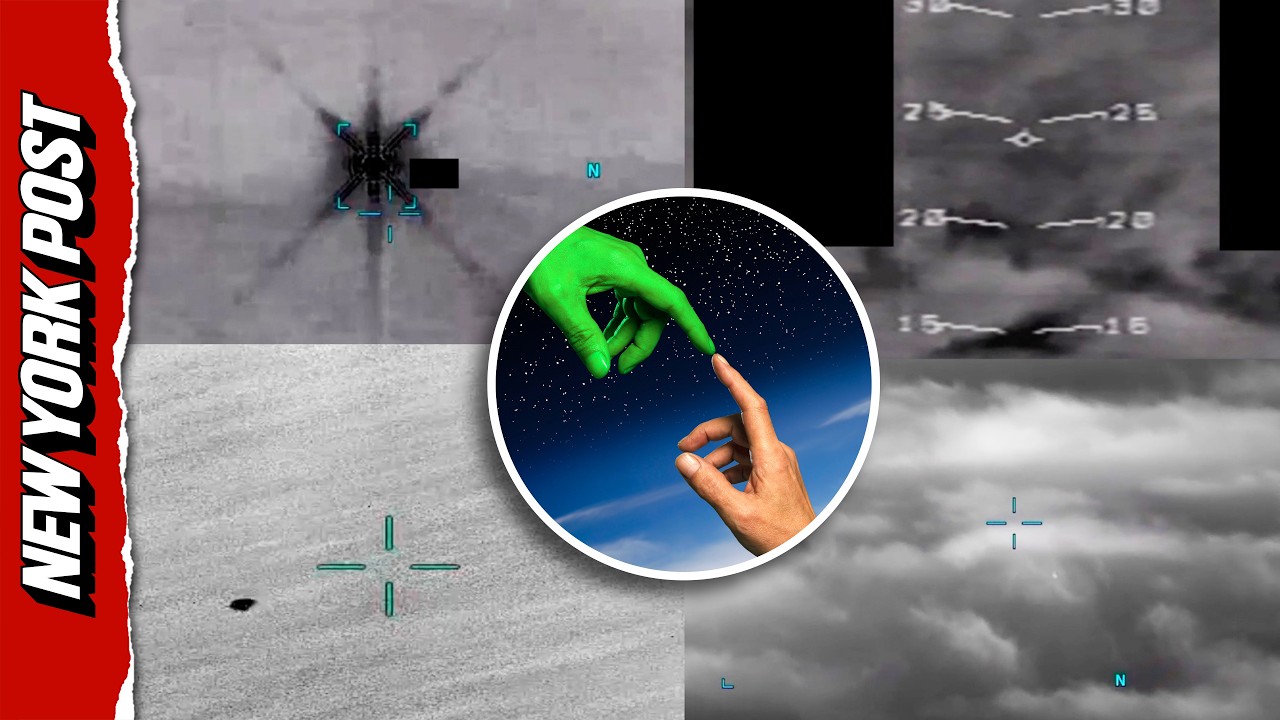
[YouTube | overseas video] New York Post coverage and analysis (original English version):
Overview of the Fourth Batch of Files
This release of the fourth batch of UAP files marks another major advance in U.S. government UFO disclosure since 2026. Under the PURSUE framework, the previous three batches were published in succession on May 8, May 22, and June 12. These 40 new items bring the total of files already public on the WAR.GOV/UFO website to 334, and global visits have exceeded 1.7 billion, showing the enormous public attention this subject has drawn.
As with the first three batches, the fourth batch has the dual character of historical archives and contemporary records: about half the files date from 2010 or later, while the other half covers archives from the early Cold War through the beginning of this century. The diversity and breadth of the releasing sources—from military sensors to security records at nuclear facilities, from space programs to historical files of intelligence agencies—reveal the U.S. government’s long-running, systematic attention to the UAP phenomenon.
The Pantex Nuclear-Facility Intrusion (2015)
One of the most closely watched items in the fourth batch is a report, submitted by the Department of Energy, on an unknown-object intrusion over the Pantex (Pantex) nuclear-weapons facility in September 2015. Pantex, near Amarillo, Texas, is one of the most important nuclear-weapons assembly and disassembly facilities in the United States.
The report records in detail a pursuit by two security officers. Ground-surveillance radar at the facility first detected an unknown object approaching, and security personnel immediately went out under the approved contingency plan for a drone intrusion. When they gave chase by vehicle, however, they found the object completely silent, and even with binoculars they could not make out any kind of propulsion system. While it was being tracked, the object could also accelerate and change direction. It flew continuously for 3 to 5 minutes at about 100 to 200 feet above the ground, then departed the plant area to the north. The security officers’ statements, the video, and the other evidence were all turned over to the Federal Bureau of Investigation (FBI).
A mysterious object a U.S. military pilot ”had not seen in 28 years”
Another ”Range Fouler Debrief” (Range Fouler Debrief) from an incident over the eastern United States in 2019 discloses detailed testimony from a veteran military pilot. This pilot, with 28 years of Air Force and Navy service, wrote in the report: ”I noticed an object whose flight characteristics were unlike anything I had seen in 28 years of flying missions for the Air Force and the Navy.”
As described, a small object was below their flight path, flying in a straight line at high speed in the opposite direction, and was captured by onboard recording equipment after about 10 to 15 seconds. The pilot tried to zoom the image for more resolution, but the object was so fast that it left the field of view in an instant, and even reducing the magnification did not recapture it. Later analysis showed that the object had a rectangular outline. Other people on the scene, with equal or greater experience, also could not identify it.
A ”deformed balloon” over the Atlantic (2020)
An incident over the North Atlantic in 2020 presented an entirely different character. A Navy weapons-systems officer described, in a range-fouler report, an object that was ”darker in color, slightly reddish, and about 12 to 15 feet in height.” The report is heavily redacted. It describes the object as, ”structurally, like a huge, slightly deformed balloon,” but the crew could not verify this at the merge. This report is the standard U.S. Navy form used to record unauthorized intrusion into controlled airspace during active military operations or training.
Yellow Sea and East China Sea Incidents (2025)
The most recent records in the fourth batch occurred in 2025, in waters near China, within the area of U.S. Indo-Pacific Command. One video shows military sensors tracking a ”contrast region resembling a hexagram” over the Yellow Sea—this star-shaped appearance is in fact a diffraction pattern from the camera, an optical artifact rather than the object’s true shape, but the sensor’s tracking of a high-contrast anomaly inside a small area is itself an important observational record. Another video follows an unknown object over the East China Sea for several minutes. These modern sensor records provide UAP research with the latest operational data.
Historical files: the 1949 Los Alamos ”green fireball” conference
Among the historical files in this release, the one that draws the most attention is undoubtedly the complete transcript of a meeting of leading physicists and scientists held at Los Alamos, New Mexico, in February 1949. The meeting was organized by Edward Teller (Edward Teller), known as ”the father of the hydrogen bomb,” and the participants included top scientists from the Manhattan Project and representatives of the Army, the FBI, the Atomic Energy Commission, the University of New Mexico, and the University of California’s Los Alamos group. Also present was Fred Reines (Fred Reines), who would receive the 1995 Nobel Prize in Physics.
The core subject of the meeting was the ”green fireball” phenomenon that kept appearing over the Los Alamos nuclear laboratory. The astronomer Lincoln LaPaz (Lincoln LaPaz) compared these events with ordinary meteor falls and noted that ”similar phenomena have never been observed in cases of meteorite falls.” The famous ”Starvation Peak incident” was described as a flight that began suddenly, was yellow-green, nearly horizontal, and lasted about two seconds. The meeting never reached a consensus—the hypothesis that shallow meteorites were entering the atmosphere was raised but not settled. At the close, laboratory director Norris Bradbury (Norris Bradbury) acknowledged that the horizontal trajectories and the silence of these fireballs still could not be explained. Teller himself calculated the physical properties of these mysterious fireballs on a blackboard.
Review Records for Project Sign and Project Blue Book
This release also includes a 1948 progress report on ”Project Sign” (Project Sign) and review documents for ”Project Blue Book” (Project Blue Book). Project Sign was the first formal UFO investigation body established by the U.S. Air Force in 1947. Its progress report covers one hundred sightings between 1947 and 1948 and directly reveals the earliest systematic methods the U.S. military used to investigate UAP. The report also attaches a photograph of the tailless Horten Flying Wing (Horten Flying Wing)—a German tailless aircraft shaped somewhat like a flying saucer—whose glider prototype reached an altitude of 14,200 feet as early as 1938, and the study treats this as a conventional explanation for early flying-saucer reports. The Project Blue Book review documents record the assessment of the scientific advisory committee in 1966 and 1967 and its recommendation—that the Air Force should contract with university-affiliated scientific teams to investigate selected sightings independently.
NASA Space Imagery and Audio Records
The 3 NASA photographs and 4 audio recordings in the fourth batch are equally striking. A photograph of an unidentified object in low Earth orbit, taken through a window during a 1996 Space Shuttle Columbia mission, prompted discussion—even with a complete satellite catalog, the government still could not determine its identity. The object in the photograph has a free-floating character and may be related to orbital debris, but its unidentifiability is itself an important record. Debriefing records from Apollo 14 and Apollo 17 discuss the ”light-flash phenomenon,” now confirmed by the scientific community to be a biological effect produced when high-energy cosmic rays pass through the eye and strike the retina—these records display the scientific paradigm for recording observations made in spaceflight.
The Future of Continued Disclosure
Department of War spokesman Sean Parnell (Sean Parnell) stated clearly in a statement: ”The Department of War and our agency partners are actively preparing the release of the next batch of UAP files.” This fourth batch is not an endpoint, but part of a continuing, rolling process of disclosure.
Avi Loeb (Avi Loeb), professor of astronomy at Harvard University and chair of the White House scientific advisory committee on UAP, points out in his in-depth analysis that these declassified files ”show beyond any doubt that the U.S. government has observed mysterious objects in the sky.” Professor Loeb says the committee ”does not need to know where or how the data were collected”; so long as it has enough data to confirm that anomalous objects are being dealt with, it can analyze their properties and pass the findings on to the wider scientific community.
As the WAR.GOV/UFO website continues to release more files on a rolling basis, humanity’s understanding of the UAP phenomenon is entering an era of transparency without precedent. All of the fourth-batch files already released can be viewed and downloaded directly on the official WAR.GOV/UFO site.
ALIENRESEARCH will continue to follow subsequent releases and analyze them in depth.
References:
– CBS News: Pentagon releases new batch of UFO files: “Unlike anything I had seen” (July 10, 2026)
– Avi Loeb: Highlights from the Fourth UAP Data Release by the U.S. Government (Medium, July 10, 2026)
– Department of War: Fourth Release of UAP Files (WAR.GOV, July 10, 2026)
– New York Post: US Military Releases 4 Mysterious UFO Videos (YouTube, July 10, 2026)
– Bilibili uploader ”Click to Watch Aliens”: The Pentagon releases the 4th batch of alien and UFO files (complete collection)


