
Deathbed Testimony: WWII Ace Magruder on Live Alien Experiments in Hangar 18
In UFO research, one kind of testimony is treated as the weightiest evidence there is—a deathbed confession. When a battle-tested service member, covered in honors, chooses in the last moments of life to tell a secret kept for half a century, ordinary skepticism cannot explain that testimony away. Colonel Magruder’s deathbed testimony is the most stunning example of this kind of evidence.
In the summer of 1947, as news of the Roswell incident spread across the United States, a Marine Corps colonel named Magruder was being sent to Wright Field in Dayton, Ohio—later Wright-Patterson Air Force Base. He went as a student at the Air War College, and the assignment sounded as ordinary as could be: to look around and to learn. What he saw with his own eyes would overturn everything he thought he knew about the world. In the last years of his life, he chose to tell all of it to his children.
The carefully translated Chinese-English video below was produced by the creator “天才龙猫小六子” and fully reconstructs the stunning details of Magruder’s deathbed testimony.
Magruder’s Legendary Career

Marion Milton Magruder (Marion Milton Magruder) was born on June 27, 1911, in Lexington, Kentucky. In 1936 he graduated with honors from the University of Kentucky with a bachelor’s degree in psychology. In college he was the university’s undefeated Golden Gloves light-welterweight boxing champion. That early training of body and will laid a firm foundation for his later military career. The same year he received his commission through the Reserve Officers’ Training Corps, formally joined the U.S. Marine Corps, and became a second lieutenant.
In July 1938 Magruder entered Naval Air Station Pensacola for flight training and became naval aviator number 6008. In early 1943 he was ordered to the Royal Air Force to study radar-intercept night fighting. The U.S. Navy then badly needed an effective night-fighter force in the Pacific, and Britain was experienced in that field. Magruder’s task was to absorb British night-fighting experience and reshape it into a system suited to the Marine Corps’ single-seat, single-engine fighters.
It was an extremely difficult undertaking. The Royal Air Force used two-seat night fighters, with a dedicated radar operator in the back seat. Carrier warfare in the Pacific, though, meant the Americans needed single-seat fighters, so the pilot had to fly, search, intercept, and attack entirely on his own. Magruder designed an innovative scheme that paired ground-controlled interception with airborne radar: a ground radar station guided the pilot close to the target, and the pilot then turned on a short-range airborne radar and locked on himself. That system later became the standard pattern of American night fighting.
On October 1, 1943, Magruder became the first commanding officer of the newly formed night-fighter squadron VMF(N)-533. The unit became known throughout the service as “Black Mac’s Killers” (Black Mac’s Killers)—“Black Mac” was Magruder’s nickname, from his dark complexion and his decisive character. They flew the most advanced night fighter of the day, the F6F-3(N) Hellcat.
In May 1944 Magruder’s night-fighter squadron was deployed to Enewetak Atoll, responsible for night air defense in the Marshall Islands. It was a dangerous stretch of sea—Japanese bombers often used the dark to attack American positions. Under Black Mac’s command, VMF(N)-533 suppressed the threat of Japanese night bombers with very high efficiency. In May 1945, as the Battle of Okinawa reached its fiercest point, Magruder’s squadron was ordered to move, as a whole and within three days, to Yontan Airfield on Okinawa. It was the most brutal battle the Americans fought in the Pacific War.
On Okinawa, Black Mac’s Killers ran up an astonishing score. VMF(N)-533 recorded 35 confirmed kills plus 1 probable—all of them pure radar intercepts. That total was almost the combined score of every other night-fighter squadron on Okinawa. VMF(N)-533 thus became the highest-scoring night-fighter squadron in the Pacific theater. Magruder himself was awarded the Legion of Merit and the Air Medal more than once, and his gift for command was fully proved in the fire of the war.
After the war Magruder stayed in the Marine Corps, commanded several aircraft groups, and eventually rose to command a Marine Corps air station. He retired in 1961 as a colonel, having given twenty-five years of his life to the service. For a young man who had come out of Lexington, Kentucky, a record like that was legendary. Yet beside his distinguished record in combat, what he saw in the summer of 1947 is the story that is truly stunning.
A Secret Visit from the Air War College
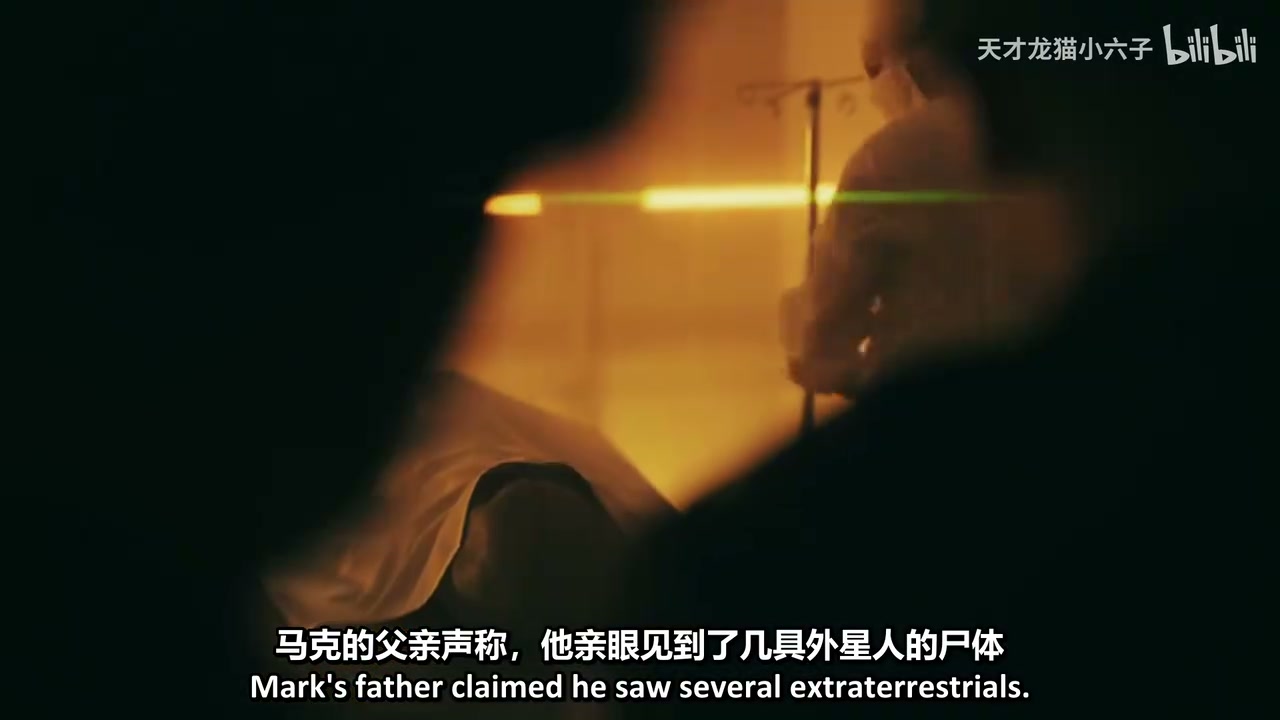
In the summer of 1947 Magruder, by then a colonel, was selected for the Air War College at Wright Field in Dayton, Ohio. The Air War College is the highest military school of the U.S. Air Force, devoted to training future senior commanders and strategic decision-makers. Everyone chosen to study there was an elite of the service.
That July, something that shocked the country happened at Roswell, New Mexico. The military first announced that it had recovered a “flying saucer,” then quickly changed its story and said it was only a weather balloon. Wright Field—later Wright-Patterson Air Force Base—was one of the “higher headquarters” to which, in the accounts of the physical evidence, material from Roswell was sent. Many researchers believe that at least some of the Roswell wreckage was transferred there.
While Magruder was attending the Air War College, the college organized a tour of facilities inside the base. The tour went beyond the usual. The students were taken into a building called “Hangar 18.” From what Magruder later told his children, the visit was not an accident. It was more like a selective “internal briefing”—letting a few senior officers learn things they needed to know that were not fit to be made public.
The legend of Hangar 18 goes back a long way in UFO research. In 1974, UFO researcher Robert Spencer Carr publicly claimed that the Air Force was hiding “two flying saucers of unknown origin” in Hangar 18 at Wright-Patterson. Carr also claimed that a senior military source had told him he had seen the bodies of 12 alien beings being dissected. The 1980 film Hangar 18 carried the legend into popular culture. Arizona senator and 1964 Republican presidential nominee Barry Goldwater also said publicly that he had tried, through General Curtis LeMay, to enter the so-called “Blue Room”—a top-secret area of Hangar 18 said to hold alien evidence—and was sternly refused. These supporting accounts differ, yet all of them point to the same place.
A Stunning Find Inside Hangar 18
Before he died, Magruder told his children that what he saw inside Hangar 18 was a living alien being.
It was not a corpse and not a specimen. It was a being that was still alive. According to Magruder, the military had imprisoned this being inside the hangar and was running experiments on it. His children remembered his words exactly: “The military destroyed this being by experimenting on it. That was a shameful thing.”
That sentence gives away several horrifying facts. First, the U.S. military had not only the wreckage of an alien craft; it had a living alien being. Second, in 1947 the military ran organized experiments on that living being, rather than meeting it through scientific exchange or humane treatment. Third, those experiments ended in the being’s death. Fourth, Magruder, a career officer, used the word “shameful” (shameful)—a moral judgment that came from him.
Magruder’s children recalled that their father was agitated as he told the story. For a career officer who had seen countless deaths and wholesale destruction in the Second World War, something that could make him call it “shameful” had gone far beyond the cruelty of war itself. It was systematic harm done by one intelligent life to an unfamiliar intelligence.
Another military pilot’s account lines up with Magruder’s testimony. Oliver Henderson once told his wife that he had flown wreckage of a flying saucer, and the bodies of several small alien beings, from Roswell to Wright Field. If Henderson told the truth, the alien being in Hangar 18 was very likely one of the alien crew recovered at Roswell, while the others may already have died in the crash. The one Magruder saw may have been the only survivor—until the military’s experiments took its life.
One view is that the way the U.S. military acted toward alien life in 1947 reflected the security fears peculiar to the early Cold War. Fresh from the Second World War and already locked in confrontation with the Soviet Union, any unknown force from “outside” was treated as a possible security threat rather than a chance to communicate. Magruder’s testimony shows what that fear-driven logic produced: a contact that might have changed the course of human history was destroyed by the military’s secret experiments.
How Credible Is the Testimony?
Any testimony about UFOs and alien life has to be tested for credibility. Magruder’s testimony is unusually persuasive on several counts.
First, the source is highly reliable. Magruder was not an obscure figure on the margins, and he was not a so-called UFO enthusiast. He was a Marine Corps colonel, a pioneer of night fighting in the Second World War, and the commander of an ace squadron, and he retired with the Legion of Merit, the Air Medal, and other honors. A man like that had a great deal to lose—standing, honors, the dignity of a military life—and he had no reason, late in life, to invent a story that would disgrace him.
Second, the timing gives the testimony a special ethical weight. Magruder said these things to his children as he was dying. A deathbed confession has long been treated as highly credible in legal and moral tradition. A person about to leave the world has no reason left to keep a lie going. A deathbed confession is, on the contrary, often the knot deepest in the heart that finally has to be undone.
Third, his rank and his place fit what he described. As a colonel studying at the Air War College in the summer of 1947, it was entirely reasonable that he would be shown highly classified facilities at Wright Field. The Air Force’s reasoning is easy to follow as well: these students would become senior American commanders, and letting them know these secrets was meant to make sure the top of the chain of command understood the “real situation.”
Fourth, Magruder’s testimony does not stand alone. Oliver Henderson’s similar account, Senator Goldwater’s public statement that he was refused entry to the “Blue Room,” and the Air Force’s repeated changes of story on Roswell—first a flying saucer, then a weather balloon, and in 1994 an admission that it was the high-altitude balloon spy project “Project Mogul”—fit together into a disturbing picture.
The limits of the testimony have to be faced as well. Everything Magruder said reached the public through his children, not as testimony he gave in public himself. Memory and retelling by the children inevitably bring in some vagueness. From 1947 until Magruder’s death in 1997, a full fifty years passed, and even in a deathbed recollection some details may no longer be exact simply because of the time that has gone by.
The Only Time the Deathbed Testimony Was Made Public
It has to be said plainly that Magruder himself never told this story directly to the public. All his life, he told the secret only to his own children, and only as he was dying. For years afterward the children stayed silent too, until later they chose to make the account public. That means everything known today about Magruder seeing a living alien inside Hangar 18 comes from one and the same disclosure—the only one—inside the family.
This fact cuts deeply both ways. On one side, a single source means the details cannot be confirmed by cross-checking. On the other, precisely because this was the only time in Magruder’s life that he broke his silence, and because he chose the particular moment of his death, the testimony has a sincerity nothing else can replace. He published no memoir, gave no interview, and went to no UFO conference. He only wanted his children to know the truth before he left the world.
Magruder died on June 27, 1997, at the age of 86—on his eighty-sixth birthday. He went through life carrying too many secrets. The alien life imprisoned, experimented upon, and finally destroyed inside Hangar 18 was only one of them.
Conclusion: A Door That Was Shut
Colonel Magruder’s deathbed testimony is the weightiest personal witness among all the stories about Hangar 18 and the aliens of Roswell. Its force does not lie in how rich the evidence is, or in how far it can be checked—in fact it cannot be checked at all—but in how pure the source is. The man who said this was not a UFO enthusiast and not a leaker chasing fame. He was a soldier who came home from the war covered in medals, an old man who, at the end of his life, wanted only to set down what he carried inside.
If what Magruder said is true, then human history after 1947 missed a turning point that could have changed the course of civilization. An intelligent life from another world reached Earth alive and died in an experimental cage of the U.S. military. This is not only a story about a UFO. It is a story about how fear governed the first human response to the unknown, and a story about how an opportunity was wasted in the anxiety over security. Magruder summed it all up in the word “shameful,” and there may be no truer judgment than that.
Whether you choose to believe or to doubt, Magruder’s deathbed testimony deserves to be taken seriously. In every dispute about alien life, a confession from a dying soldier remains one of the hardest pieces of evidence to deny outright.


